How the LIVIT medication-adherence device is built and how it works. At its core it's a
miniature scale — a load cell that detects the weight change when a pill is removed. Engineered with Porticos.
1 · Structure & components
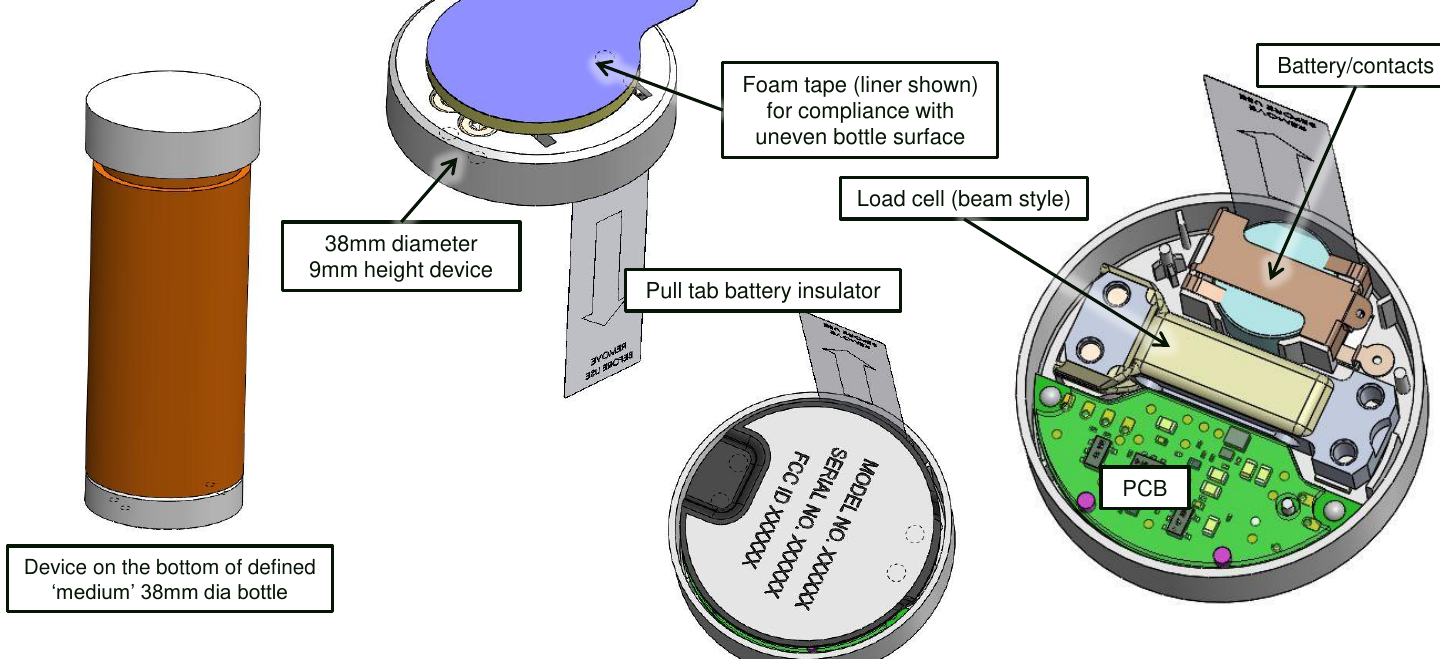
The device is a low-profile disc that couples to a standard pill bottle. Inside, a beam-style load cell does the
sensing; a housing sits on one end of the cell and a baseplate on the other — and the two must never touch, so the
cell can read a clean weight. A foam-tape liner lets it seat flush against an uneven bottle base.
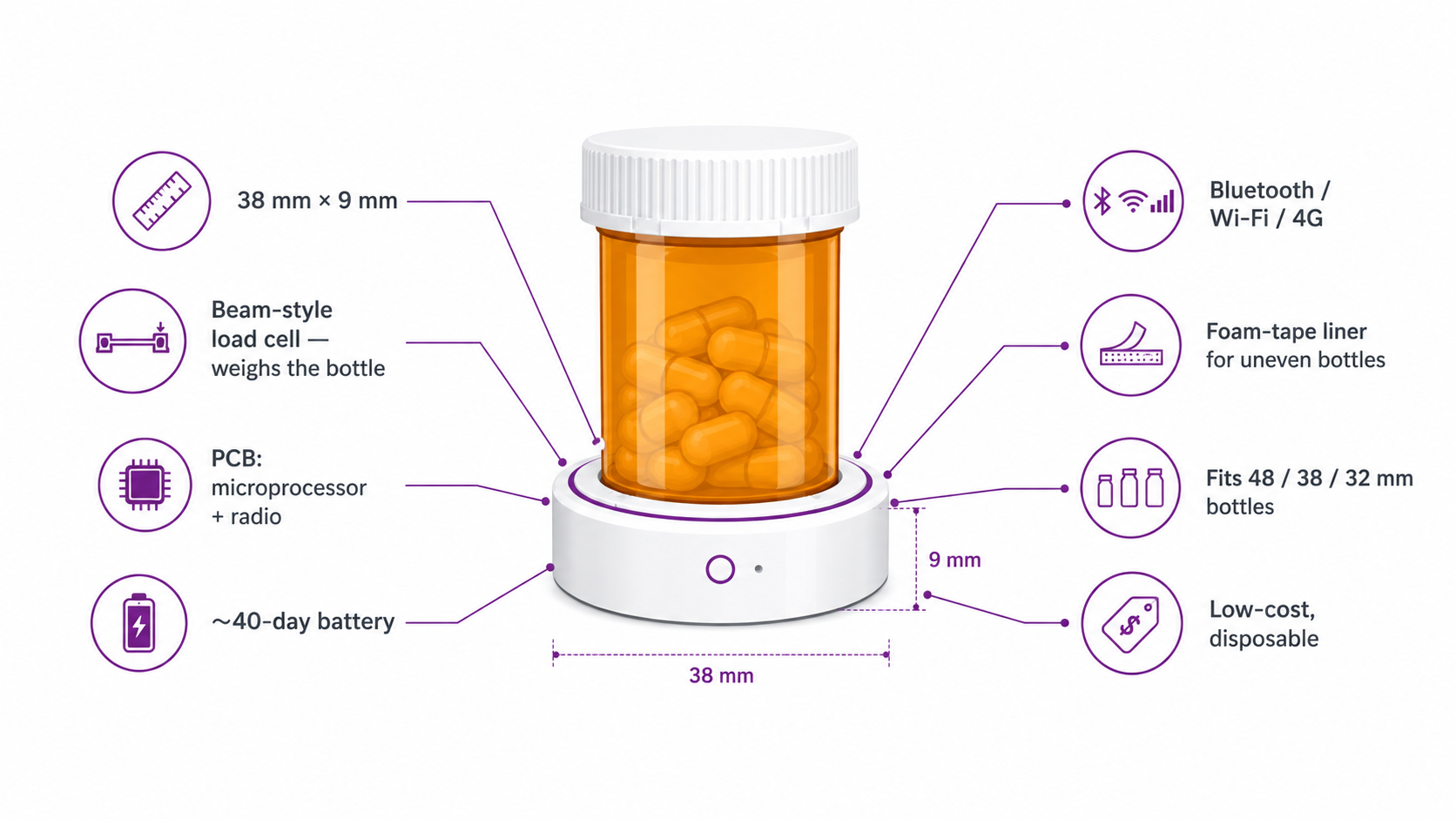
38 mm
diameter
9 mm
height
~40 days
battery life
load cell
sensing method
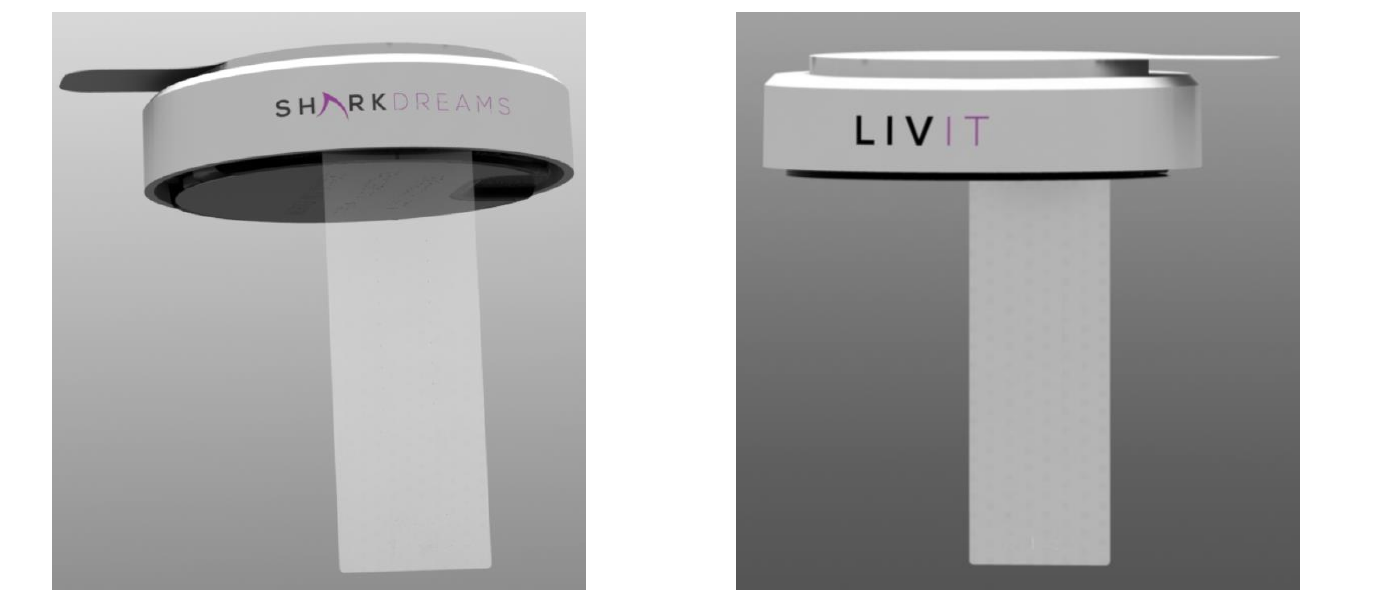
Cosmetic models — the production look in SharkDreams and LIVIT branding. (LIVIT design review.)The internals — load cell (beam style), PCB, battery + pull-tab insulator, and foam-tape liner on a 38 mm bottle. (LIVIT design review.)
Component stack
Component
Function
Beam-style load cell
The core sensor — measures the small weight change as pills are removed (a miniature scale).
Housing + baseplate
Two-part body across the load cell; the halves must never touch so the cell reads cleanly.
PCB
Microprocessor, memory, and radio on a compact board.
Battery + pull-tab insulator
Coin cell, activated by pulling the tab at the pharmacy; sized to last the prescription.
Foam-tape liner
Compliant top layer that seats the device flush on an uneven bottle base.
Transmitter
Bluetooth / Wi-Fi / 4G to phone, base station, and cloud.
Unique ID + auth
Per-unit device ID; fingerprint / barcode activation ties the device to the right patient.
2 · The make — materials & manufacturing
The design goal was a sensor cheap and small enough to be disposable — applied at the pharmacy and lasting
exactly as long as the prescription. Two cosmetic models were tooled (SharkDreams- and LIVIT-branded), sized for a
"medium" 38 mm-diameter bottle, with a foam-tape liner sourced to handle uneven bottle surfaces.
Disposable economics — low part count, single-use lifecycle.
One core, many housings — the sensing core also explored as lid, cap, and tape/ring forms.
Tooled cosmetic models — production-look housings, not just breadboards.
The working spec — dimensions, the load-cell sensing stack, connectivity, and bottle fit.
Manufacturing
Full and partial manufacturing was pursued across three countries as the design matured:
USA — 2017 · full & partial buildsChina — 2018–2019 · ~3,000 unitsIndia — component manufacturing
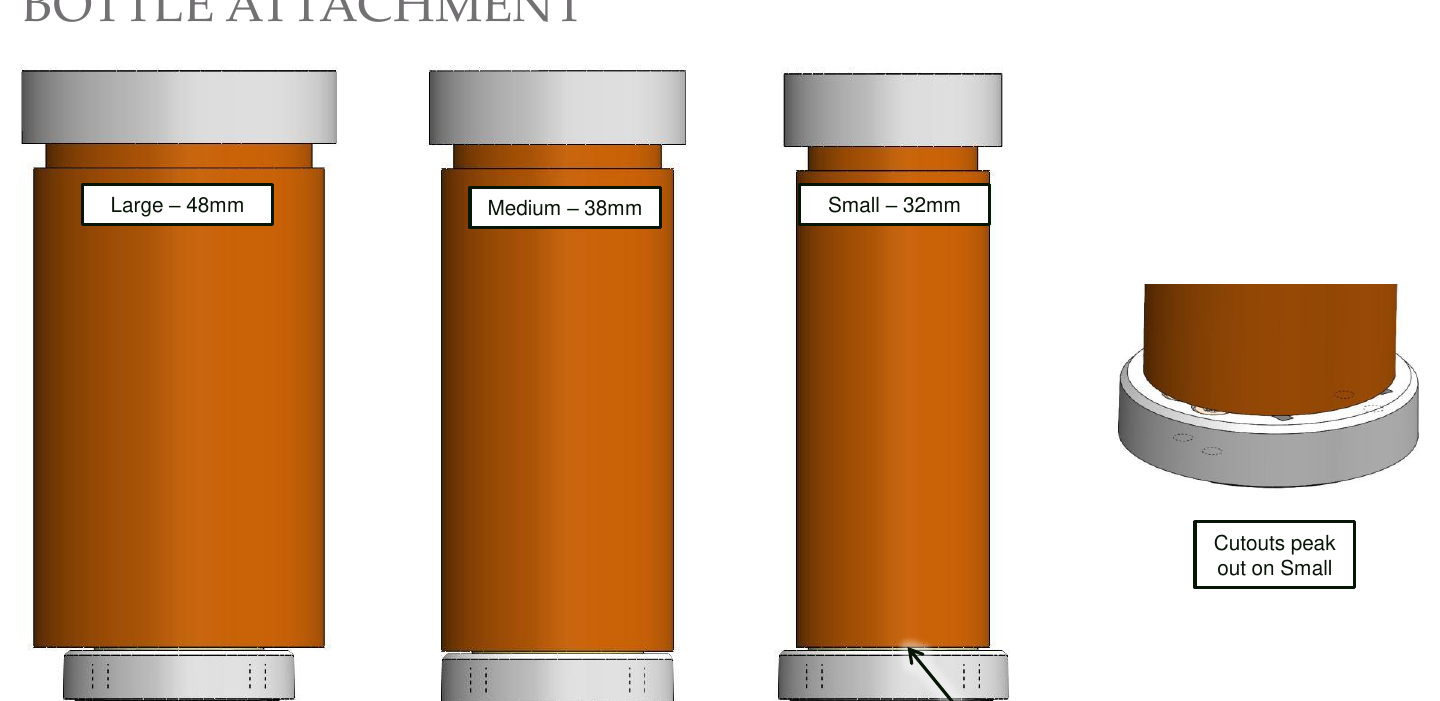
One device, three bottle sizes — Large (48 mm), Medium (38 mm), Small (32 mm). The foam tape is sized thicker than the bottle's bottom lip so the device always seats flush. (Design review.)
Product design & mechanical engineering: Porticos (load cell, housing/baseplate, cosmetic models). Board work with VieMetrics; secured-chip exploration with a global cloud & silicon platform (a secured-chip platform).
3 · The mechanics — how it works
Sensing logic — a miniature scale
Continuous weighing — the load cell reads the bottle's weight; a drop equal to one pill confirms a dose was actually removed, not just that the bottle was touched.
Missed / over-dose logic — weight-change events are compared to the prescribed schedule; a missed dose or an over-utilization is flagged.
Exposure & tamper — environmental and unexpected-access events are flagged.
Authentication — pull-tab activation plus fingerprint / barcode verification tie the device to the right patient at the pharmacy.
Power discipline — the device idles between events to hold the ~40-day battery.
The data loop
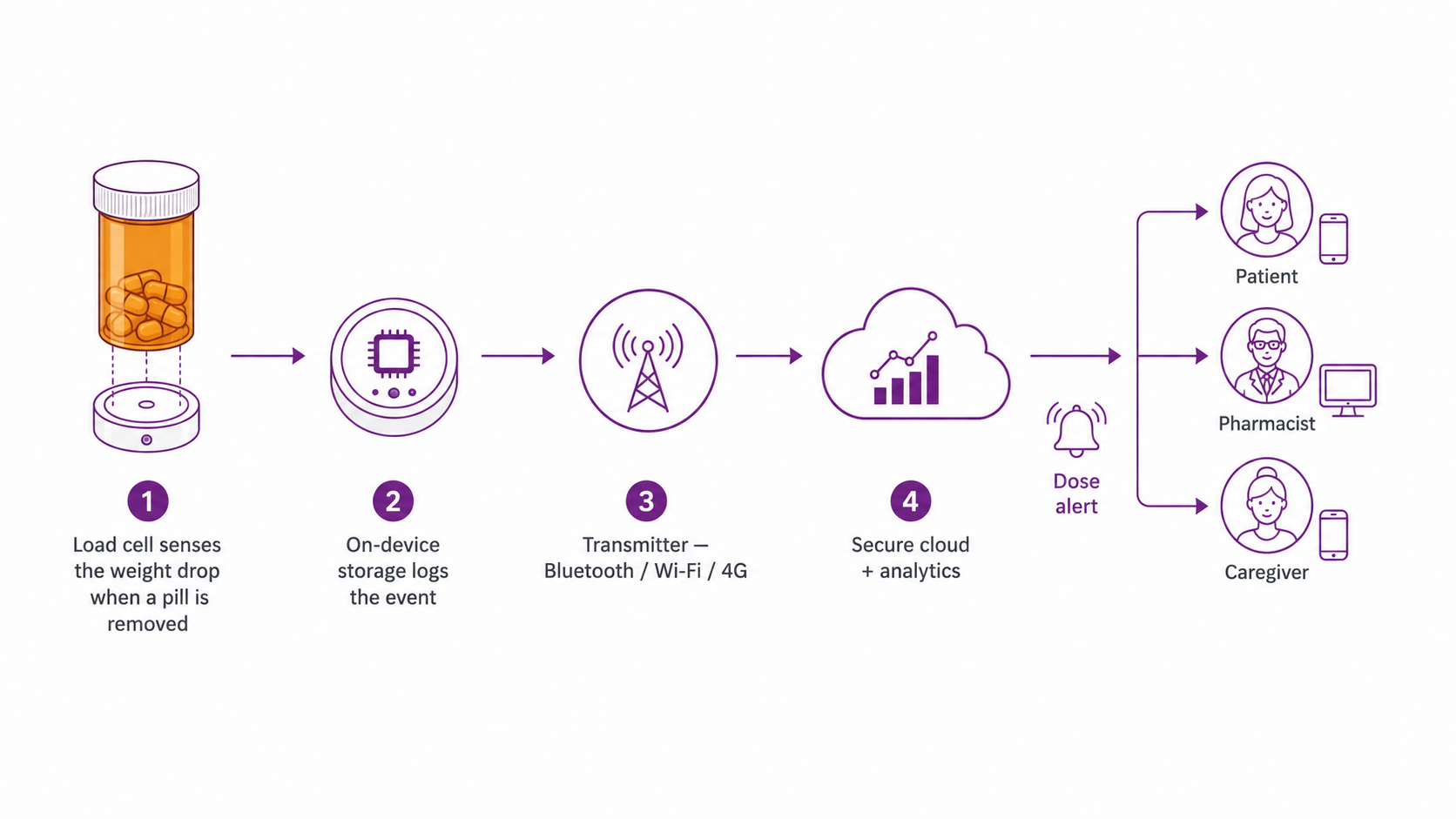
The load cell senses the dose → on-device storage → transmit → secure cloud → a dose alert to the patient, pharmacist, or caregiver.
Each weight-change event follows one path: the load cell detects it, the device stores it locally, the
transmitter syncs to the cloud, and the platform notifies the right person — patient, pharmacist, or
caregiver — the moment adherence slips.
4 · The Patch — vitals wearable (prototype)
Prototype · never deployed
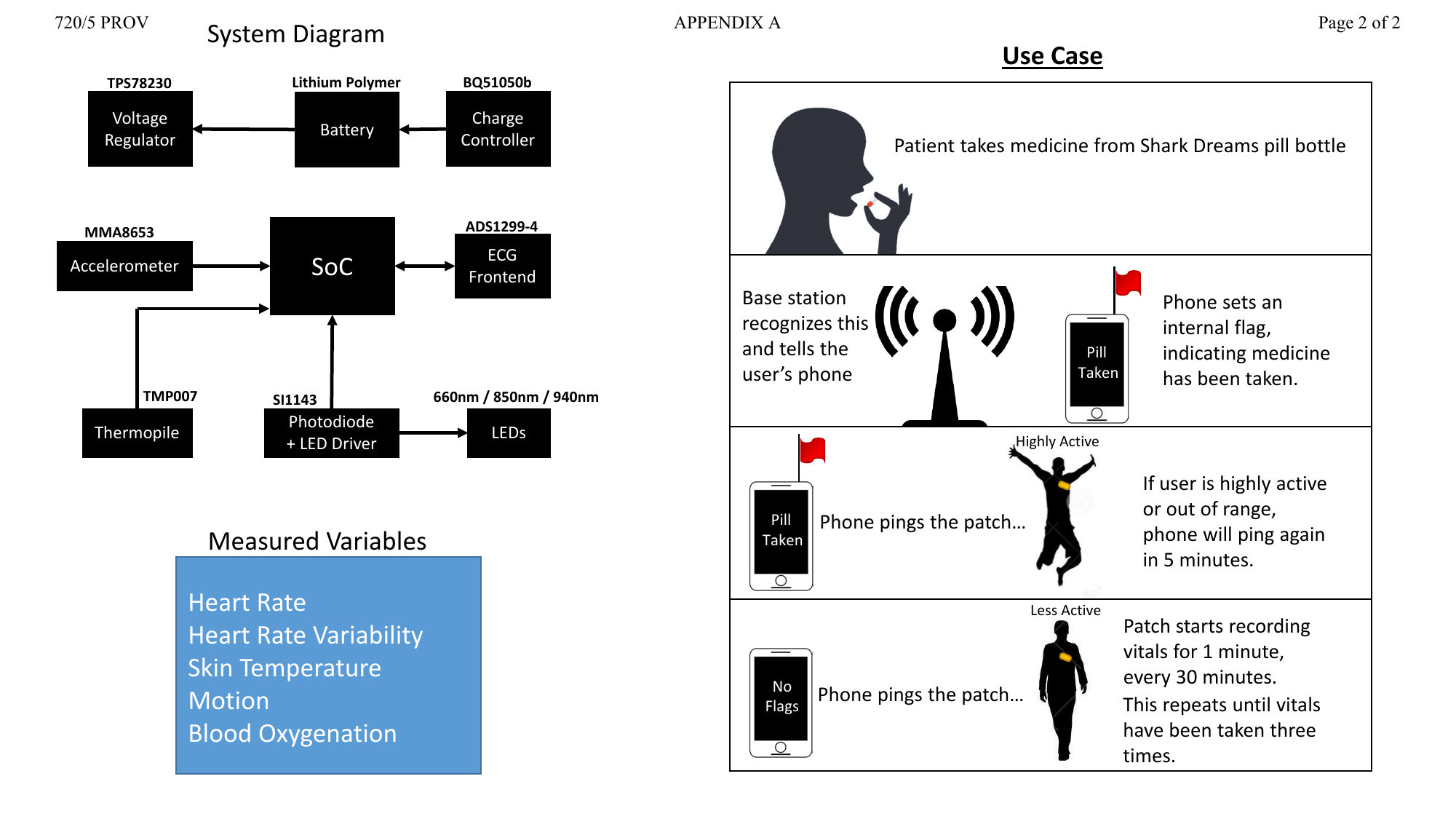
A companion skin-worn patch ("SharkSkin") was engineered to read the vitals a medication can affect — so a provider
could see not just adherence but the patient's response. Developed by VieMetrics (an NC State University PhD team);
used only in internal testing — no commercial or clinical deployment, and the device IP belongs to VieMetrics.
75 × 22 mm
patch size
150 mA
Li-Po battery
wireless
coil charging
BLE
connectivity
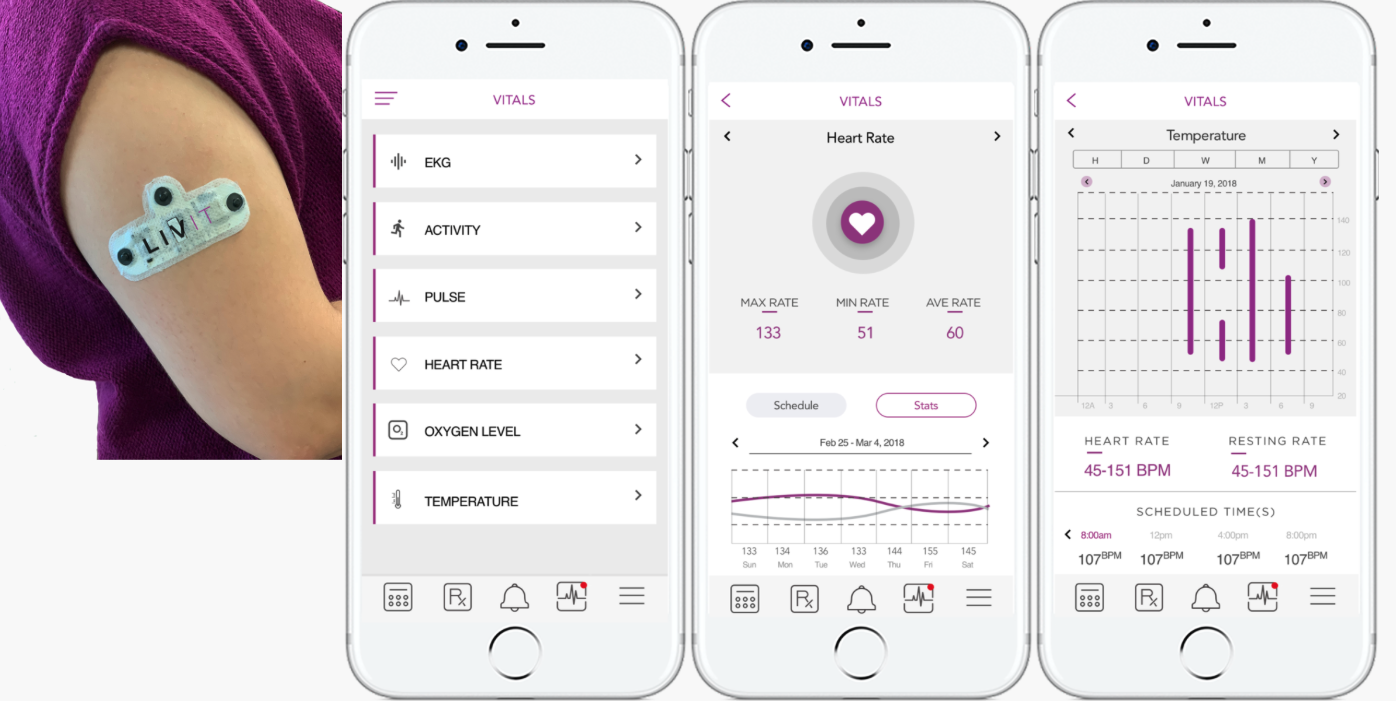
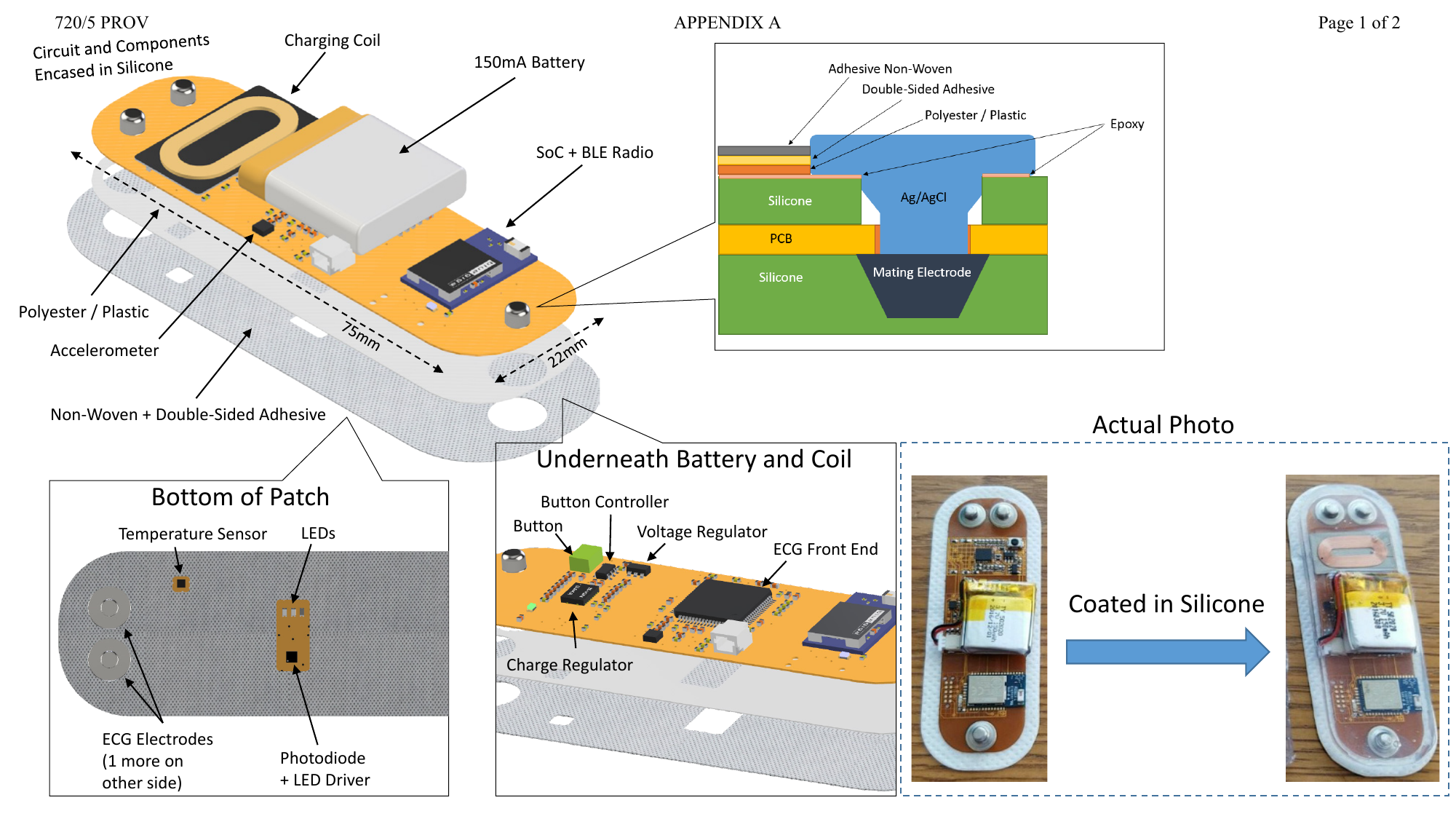
The patch worn, with a VITALS app concept — evaluated in prototype only.The built patch (75 × 22 mm) — charging coil, 150 mA battery, SoC + BLE radio, accelerometer, Ag/AgCl ECG electrodes, encased in silicone — with the actual assembled board. (Provisional patent, Appendix A.)
Engineering documentation of prior product development, prepared from original design-review and patent materials.
SharkDreams, Inc. is a prior venture and was the subject of an SEC matter, with a final judgment entered March 2025
(full record at sec.gov). Informational only — nothing here is an offer to sell, or a
solicitation of an offer to buy, any security or investment. Not legal advice.
 SHARKDREAMS